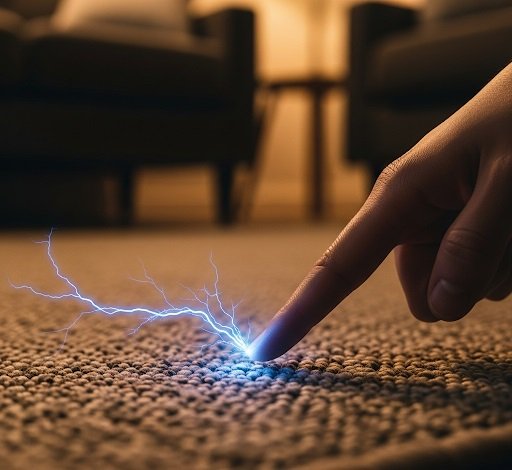
It’s a familiar, unpleasant surprise: you walk across your living room, reach for a doorknob, and ZAP! A tiny bolt of lightning jumps from your fingertip. The culprit is almost always the beautiful area rug at the center of your room. Static electricity, especially during the dry winter months, can turn your cozy living space into a minefield of minor shocks.
This annoying phenomenon is caused by a simple combination of friction (from your feet walking on the rug) and low humidity in the air. The good news is that you don't have to live with it. You can banish the zap for good with a few shockingly simple and effective tricks. This is your guide to eliminating static from your area rugs and creating a more comfortable, shock-free home.

1. Humidify Your Home: The #1 Solution
The single most effective way to combat static electricity is to address the root of the problem: dry air. Static thrives in low-humidity environments. By adding moisture back into your air, you make it more difficult for static charges to build up.
-
How it works: Water vapor in the air is conductive, and it helps to draw static charges off your body and the rug before they can build up to shocking levels.
-
What to do: Place a humidifier in the room with the problematic rug. Running it, especially during the dry winter months when your heating system is on, will make a dramatic difference not just for your rug, but for your skin, your sinuses, and even your wood furniture.
2. The DIY Anti-Static Spray
You don't need to buy expensive commercial products. You can create a highly effective anti-static spray with something you probably already have in your laundry room.
-
How it works: Fabric softener contains chemicals that are designed to reduce static cling on clothes, and they work just as well on carpet fibers.
-
What to do: Mix one part liquid fabric softener with about 10 parts water in a clean spray bottle. Shake it well. Lightly mist the surface of your area rug. Important: Do not saturate the rug. A fine, even mist is all you need. Always test the solution on a small, inconspicuous corner of the rug first to ensure it doesn't cause any discoloration. Let it dry completely before walking on it.
3. Introduce Houseplants as Natural Humidifiers
For a more beautiful and natural solution, turn to houseplants. Through a process called transpiration, plants release moisture vapor into the air.
-
How it works: Plants act as living, breathing humidifiers. A few well-placed plants can subtly increase the humidity level in a room over time.
-
What to do: Group several moisture-loving plants, like Boston ferns, spider plants, or areca palms, in the room with your rug. They will not only help to combat static but will also purify the air and add a touch of natural, calming beauty to your space.
4. Choose the Right Rug Pad
The material under your rug can also play a role. Some synthetic rug pads can actually increase static buildup.
-
How it works: Natural fibers are generally less prone to static than synthetic ones.
-
What to do: Opt for a high-quality rug pad made from a natural material like felt. A felt pad provides excellent cushioning and grip without contributing to the static electricity problem.
5. The Deep Clean: A Static Reset
Sometimes, a buildup of dirt, residue from old cleaning products, or just the general dryness of the fibers can make a rug more prone to static.
-
How it works: A deep clean can remove the residues that increase friction and can help to restore the natural moisture balance in fibers like wool.
-
What to do: A professional area rug cleaning is the best way to hit the reset button. Experts use pH-balanced solutions and controlled drying methods that not only remove deep-seated dirt but also leave the fibers in their optimal, healthy state. A thorough, professional area rug cleaning can be a surprisingly effective long-term solution for reducing static issues.
Conclusion: Live a Shock-Free Life
You don't have to tiptoe around your own home in fear of the next unexpected zap. By taking a few simple, proactive steps—from adding a bit of humidity to your air to choosing the right accessories—you can easily and effectively eliminate static electricity from your area rugs. A comfortable, beautiful home should be a shock-free zone.
C'est une surprise familière et désagréable : vous traversez votre salon, vous tendez la main vers une poignée de porte, et ZAP ! Un petit éclair jaillit de votre doigt. Le coupable est presque toujours le magnifique tapis au centre de votre pièce. L'électricité statique, surtout pendant les mois d'hiver secs, peut transformer votre espace de vie confortable en un champ de mines de petites décharges.
Ce phénomène agaçant est causé par une simple combinaison de friction (de vos pieds marchant sur le tapis) et d'une faible humidité dans l'air. La bonne nouvelle, c'est que vous n'avez pas à vivre avec. Vous pouvez bannir la décharge pour de bon avec quelques astuces étonnamment simples et efficaces. Voici votre guide pour éliminer l'électricité statique de vos tapis et créer une maison plus confortable et sans chocs.
1. Humidifiez Votre Maison : La Solution n°1
Le moyen le plus efficace de lutter contre l'électricité statique est de s'attaquer à la racine du problème : l'air sec. L'électricité statique prospère dans les environnements à faible humidité. En ajoutant de l'humidité à votre air, vous rendez plus difficile l'accumulation de charges statiques.
-
Comment ça marche : La vapeur d'eau dans l'air est conductrice, et elle aide à évacuer les charges statiques de votre corps et du tapis avant qu'elles ne puissent atteindre des niveaux choquants.
-
Que faire : Placez un humidificateur dans la pièce où se trouve le tapis problématique. Le faire fonctionner, surtout pendant les mois d'hiver secs lorsque votre système de chauffage est en marche, fera une différence spectaculaire non seulement pour votre tapis, mais aussi pour votre peau, vos sinus et même vos meubles en bois.
2. Le Spray Antistatique Fait Maison
Vous n'avez pas besoin d'acheter des produits commerciaux coûteux. Vous pouvez créer un spray antistatique très efficace avec quelque chose que vous avez probablement déjà dans votre buanderie.
-
Comment ça marche : L'adoucissant contient des produits chimiques conçus pour réduire l'électricité statique sur les vêtements, et ils fonctionnent tout aussi bien sur les fibres de tapis.
-
Que faire : Mélangez une partie d'adoucissant liquide avec environ 10 parties d'eau dans un flacon pulvérisateur propre. Agitez bien. Vaporisez légèrement la surface de votre tapis. Important : Ne saturez pas le tapis. Une fine brume uniforme est tout ce dont vous avez besoin. Testez toujours la solution sur un petit coin discret du tapis au préalable pour vous assurer qu'elle ne provoque aucune décoloration. Laissez-le sécher complètement avant de marcher dessus.
3. Introduisez des Plantes d'Intérieur comme Humidificateurs Naturels
Pour une solution plus belle et naturelle, tournez-vous vers les plantes d'intérieur. Grâce à un processus appelé transpiration, les plantes libèrent de la vapeur d'eau dans l'air.
-
Comment ça marche : Les plantes agissent comme des humidificateurs vivants et respirants. Quelques plantes bien placées peuvent augmenter subtilement le niveau d'humidité d'une pièce au fil du temps.
-
Que faire : Regroupez plusieurs plantes qui aiment l'humidité, comme les fougères de Boston, les plantes araignées ou les palmiers d'Arec, dans la pièce où se trouve votre tapis. Elles aideront non seulement à combattre l'électricité statique, mais purifieront également l'air et ajouteront une touche de beauté naturelle et apaisante à votre espace.
4. Choisissez le Bon Sous-Tapis
Le matériau sous votre tapis peut également jouer un rôle. Certains sous-tapis synthétiques peuvent en fait augmenter l'accumulation d'électricité statique.
-
Comment ça marche : Les fibres naturelles sont généralement moins sujettes à l'électricité statique que les fibres synthétiques.
-
Que faire : Optez pour un sous-tapis de haute qualité fabriqué à partir d'un matériau naturel comme le feutre. Un sous-tapis en feutre offre un excellent amorti et une bonne adhérence sans contribuer au problème de l'électricité statique.
5. Le Nettoyage en Profondeur : Une Remise à Zéro Statique
Parfois, une accumulation de saleté, de résidus d'anciens produits de nettoyage ou simplement la sécheresse générale des fibres peuvent rendre un tapis plus sujet à l'électricité statique.
-
Comment ça marche : Un nettoyage en profondeur peut éliminer les résidus qui augmentent la friction et peut aider à restaurer l'équilibre naturel de l'humidité dans les fibres comme la laine.
-
Que faire : Un nettoyage de tapis professionnel est le meilleur moyen de remettre les compteurs à zéro. Les experts utilisent des solutions au pH équilibré et des méthodes de séchage contrôlées qui non seulement éliminent la saleté incrustée, mais laissent également les fibres dans leur état optimal et sain. Un nettoyage de tapis professionnel et approfondi peut être une solution à long terme étonnamment efficace pour réduire les problèmes d'électricité statique.
Conclusion : Vivez une Vie Sans Chocs
Vous n'avez pas à marcher sur la pointe des pieds dans votre propre maison par peur de la prochaine décharge inattendue. En prenant quelques mesures simples et proactives — de l'ajout d'un peu d'humidité à votre air au choix des bons accessoires — vous pouvez facilement et efficacement éliminer l'électricité statique de vos tapis. Une maison confortable et belle devrait être une zone sans chocs.
It’s a familiar, unpleasant surprise: you walk across your living room, reach for a doorknob, and ZAP! A tiny bolt of lightning jumps from your fingertip. The culprit is almost always the beautiful area rug at the center of your room. Static electricity, especially during the dry winter months, can turn your cozy living space into a minefield of minor shocks.
This annoying phenomenon is caused by a simple combination of friction (from your feet walking on the rug) and low humidity in the air. The good news is that you don't have to live with it. You can banish the zap for good with a few shockingly simple and effective tricks. This is your guide to eliminating static from your area rugs and creating a more comfortable, shock-free home.
1. Humidify Your Home: The #1 Solution
The single most effective way to combat static electricity is to address the root of the problem: dry air. Static thrives in low-humidity environments. By adding moisture back into your air, you make it more difficult for static charges to build up.
-
How it works: Water vapor in the air is conductive, and it helps to draw static charges off your body and the rug before they can build up to shocking levels.
-
What to do: Place a humidifier in the room with the problematic rug. Running it, especially during the dry winter months when your heating system is on, will make a dramatic difference not just for your rug, but for your skin, your sinuses, and even your wood furniture.
2. The DIY Anti-Static Spray
You don't need to buy expensive commercial products. You can create a highly effective anti-static spray with something you probably already have in your laundry room.
-
How it works: Fabric softener contains chemicals that are designed to reduce static cling on clothes, and they work just as well on carpet fibers.
-
What to do: Mix one part liquid fabric softener with about 10 parts water in a clean spray bottle. Shake it well. Lightly mist the surface of your area rug. Important: Do not saturate the rug. A fine, even mist is all you need. Always test the solution on a small, inconspicuous corner of the rug first to ensure it doesn't cause any discoloration. Let it dry completely before walking on it.
3. Introduce Houseplants as Natural Humidifiers
For a more beautiful and natural solution, turn to houseplants. Through a process called transpiration, plants release moisture vapor into the air.
-
How it works: Plants act as living, breathing humidifiers. A few well-placed plants can subtly increase the humidity level in a room over time.
-
What to do: Group several moisture-loving plants, like Boston ferns, spider plants, or areca palms, in the room with your rug. They will not only help to combat static but will also purify the air and add a touch of natural, calming beauty to your space.
4. Choose the Right Rug Pad
The material under your rug can also play a role. Some synthetic rug pads can actually increase static buildup.
-
How it works: Natural fibers are generally less prone to static than synthetic ones.
-
What to do: Opt for a high-quality rug pad made from a natural material like felt. A felt pad provides excellent cushioning and grip without contributing to the static electricity problem.
5. The Deep Clean: A Static Reset
Sometimes, a buildup of dirt, residue from old cleaning products, or just the general dryness of the fibers can make a rug more prone to static.
-
How it works: A deep clean can remove the residues that increase friction and can help to restore the natural moisture balance in fibers like wool.
-
What to do: A professional area rug cleaning is the best way to hit the reset button. Experts use pH-balanced solutions and controlled drying methods that not only remove deep-seated dirt but also leave the fibers in their optimal, healthy state. A thorough, professional area rug cleaning can be a surprisingly effective long-term solution for reducing static issues.
Conclusion: Live a Shock-Free Life
You don't have to tiptoe around your own home in fear of the next unexpected zap. By taking a few simple, proactive steps—from adding a bit of humidity to your air to choosing the right accessories—you can easily and effectively eliminate static electricity from your area rugs. A comfortable, beautiful home should be a shock-free zone.